Post4 min read
Writing policy answers employees actually trust
Employees stop asking HR when answers feel generic. Three habits keep drafted replies specific and human.
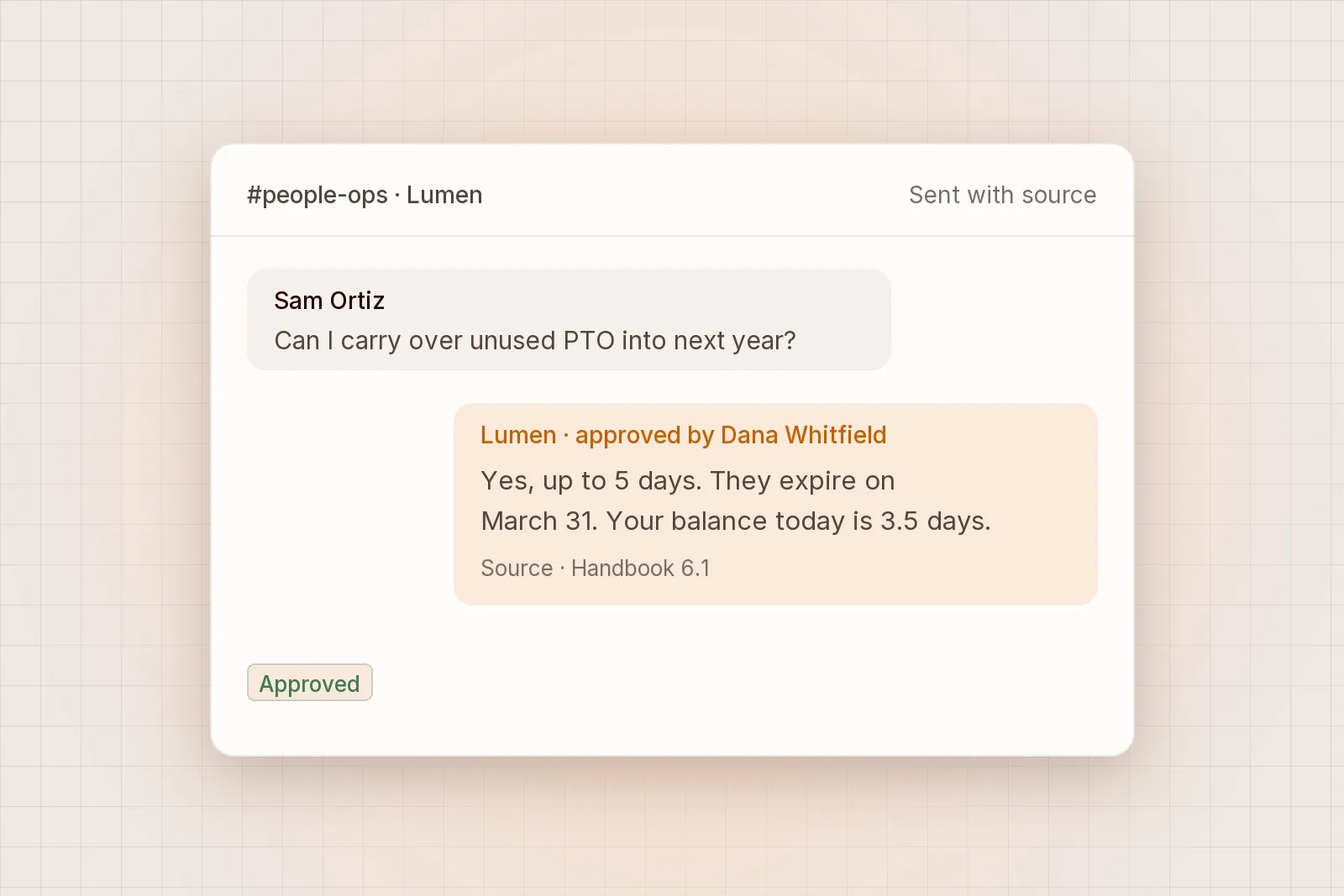
A correct answer can still feel like a brush-off. An employee asks whether they can carry over unused leave, and gets back a paragraph copied from the handbook. Every word is accurate, but it does not mention their country, their contract or the date they asked about. The next time they have a question, they ask a colleague instead, and HR loses track of what people actually need. The difference between an answer people trust and one they ignore is usually whether it speaks to the person’s situation. Three habits keep drafted replies specific and human, and a fourth keeps the hard cases where they belong.
Quote the policy, then explain it
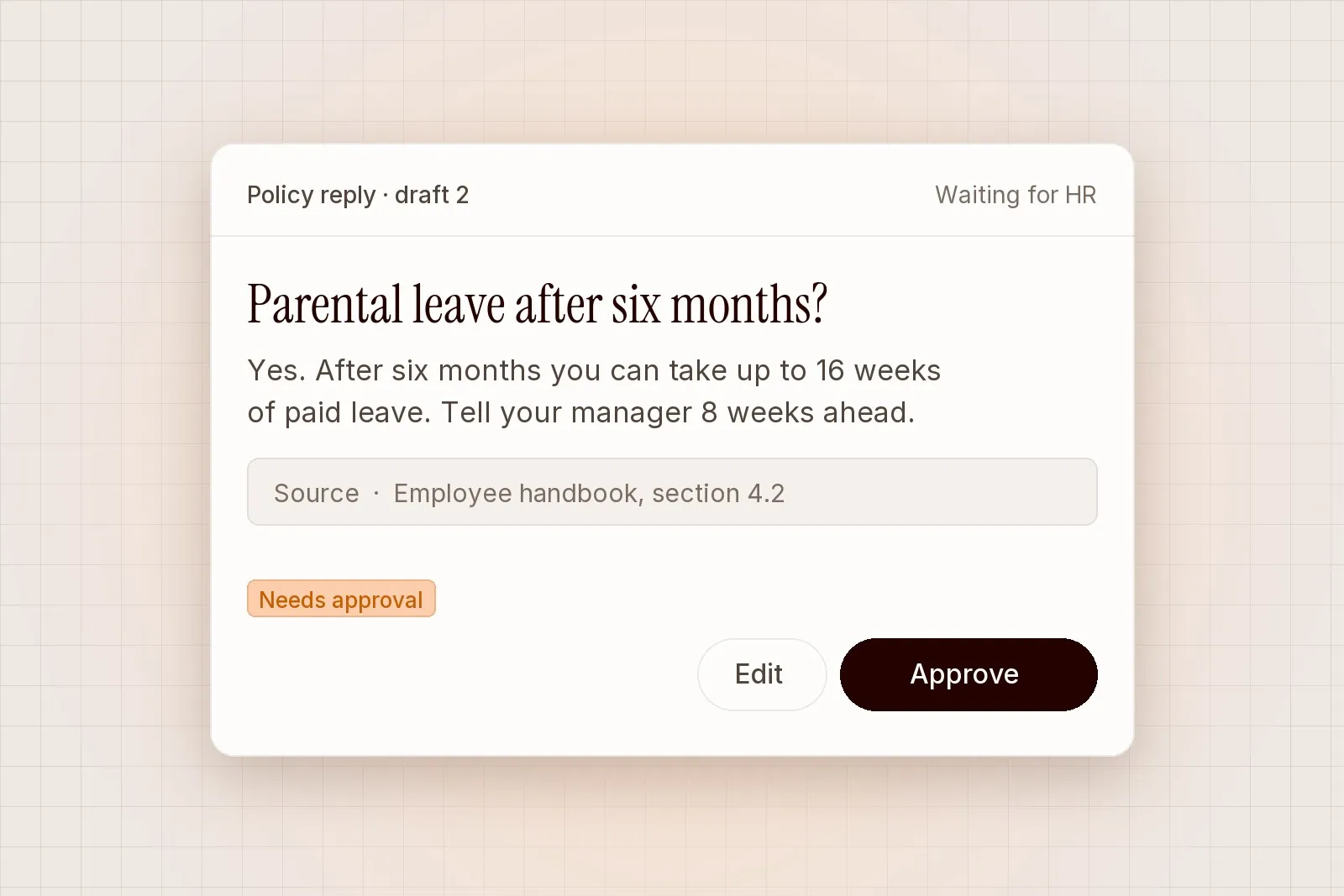
Employees trust an answer more when they can see where it came from. Every drafted reply should link to the policy it relies on and quote the relevant clause. That gives the employee something to check, and it gives the reviewer a quick way to confirm the draft is right.
Quoting alone is not enough, though. After the quote, the reply should restate the policy for this person’s case. That means using what HR already knows about them:
- Location. Leave, holidays and working-time rules often differ by country or state.
- Start date. Probation periods, accrual and eligibility often depend on it.
- Contract type. Part-time, fixed-term and contractor arrangements change many answers.
- Leave type. Parental, sick, compassionate and annual leave each have their own rules.
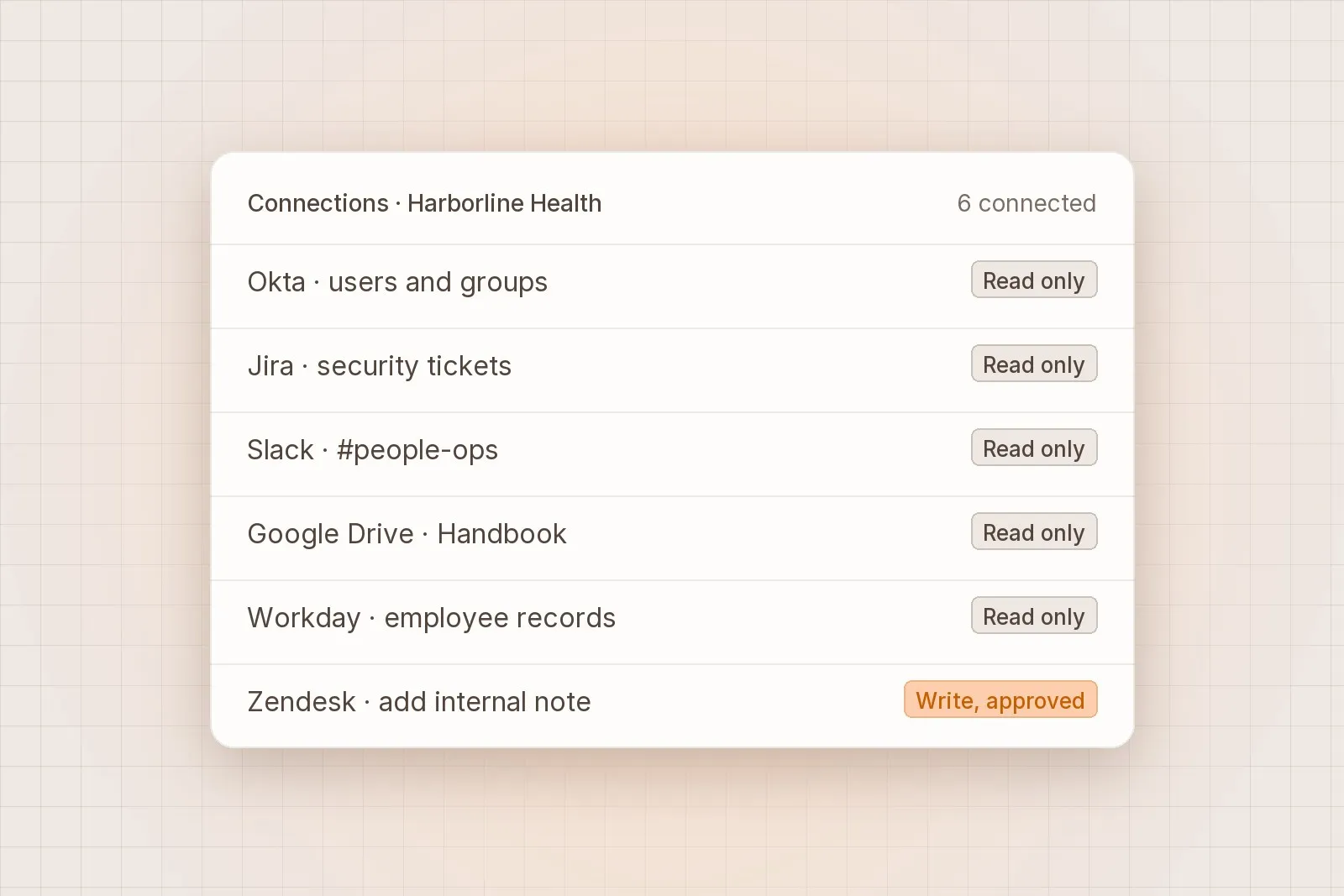
A good draft reads like this: here is the policy, and here is what it means for you, starting on this date. The agent drafts that reply from the employee’s record and the policy library, both connected read-only, and an HR partner reviews it before it is sent.
Answer the question that was asked
Policy questions often contain two questions. “Can I take Friday off for my sister’s wedding?” is asking about leave entitlement and about the approval process. A reply that covers only one leaves the employee to ask again.
Drafts should answer every part of the question in the order it was asked, then say what happens next. If the employee needs to submit a request, the reply says where. If the answer depends on a manager’s approval, the reply says so plainly. Reviewers should watch for drafts that answer a nearby question instead of the actual one, and those edits are worth feeding back into the agent’s rules each week.
“People started replying ‘thanks, that’s exactly what I needed’ instead of asking a follow-up. That was the change we noticed first.”
Sam Ortiz, HR partner
Write like a colleague
Tone matters more in HR than almost anywhere else. A reply that sounds like a legal notice makes employees feel they are being managed rather than helped. Drafts should use short sentences, plain words and the employee’s name, and they should be signed by the HR partner who approved them. The person reviewing the draft owns it once they approve it.
A few rules that help:
- Open with the answer, then give the detail.
- Avoid policy jargon unless the employee used it first.
- Keep replies short enough to read on a phone.
- End with a named contact for follow-up questions.
Let HR keep the hard ones
Some questions should never get a drafted reply. Anything about health, pay disputes or grievances goes straight to a person, with a summary and no drafted reply. The summary saves the HR partner from reading a long thread, and the absence of a draft makes it clear this one needs their own words.
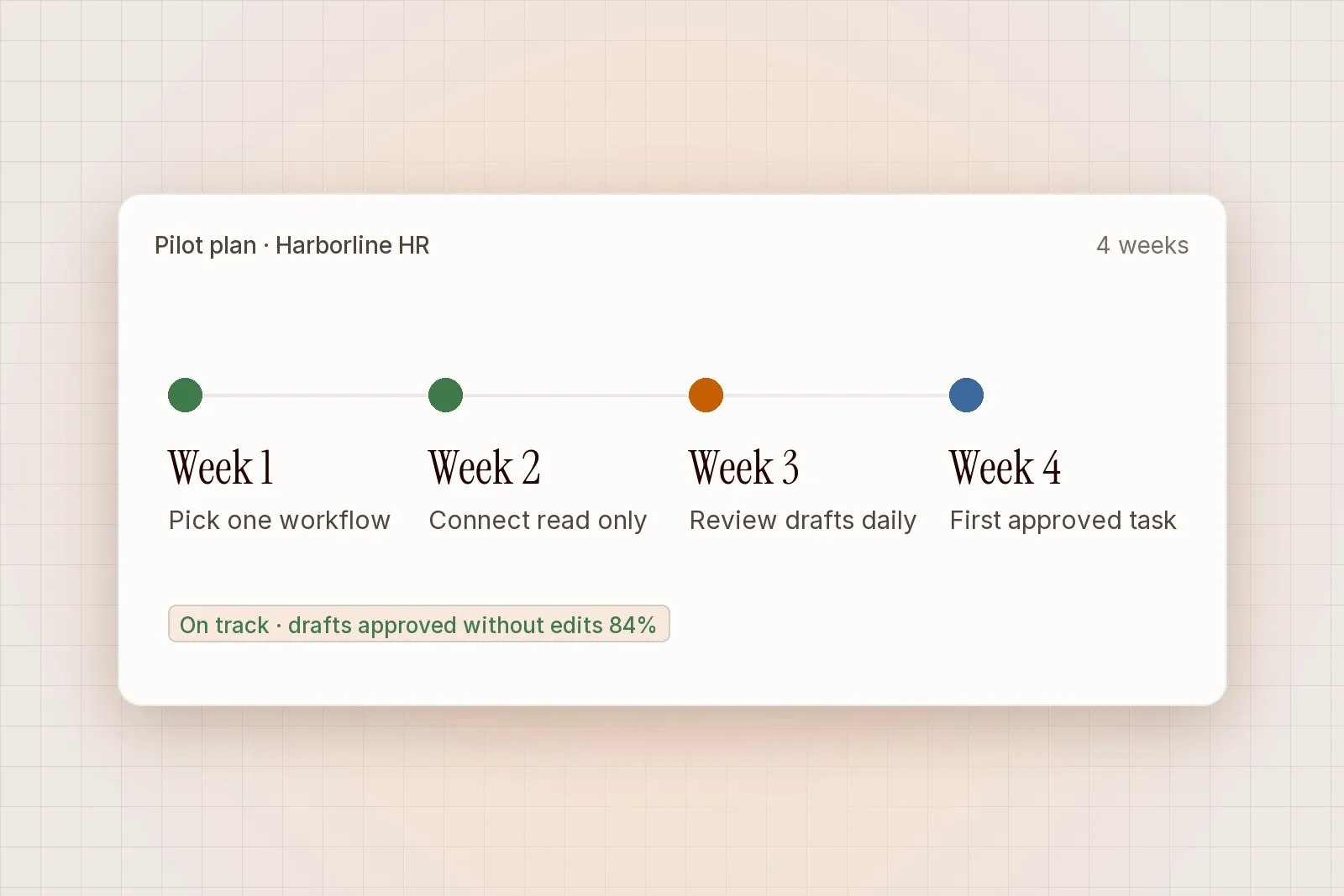
The same applies to requests that touch on investigations, a complaint about a manager or an exception to policy. The agent recognises the topic, writes a short summary of what the employee asked and routes it to the right person. Teams usually agree this list in the first week of a pilot and add to it as they see real requests.
Keeping a record
Every draft, edit and approval is written to the audit log with the reviewer’s name, and the log can be exported for HR compliance reviews. Employee data is never used to train models, and drafts are kept for 30 days by default. Over time that record also shows which questions come up most, which is often the best guide to which policies need rewriting.