Post4 min read
Four weeks from first call to first approved task
The rollout plan we use with most teams, week by week, including who needs to be in the room.
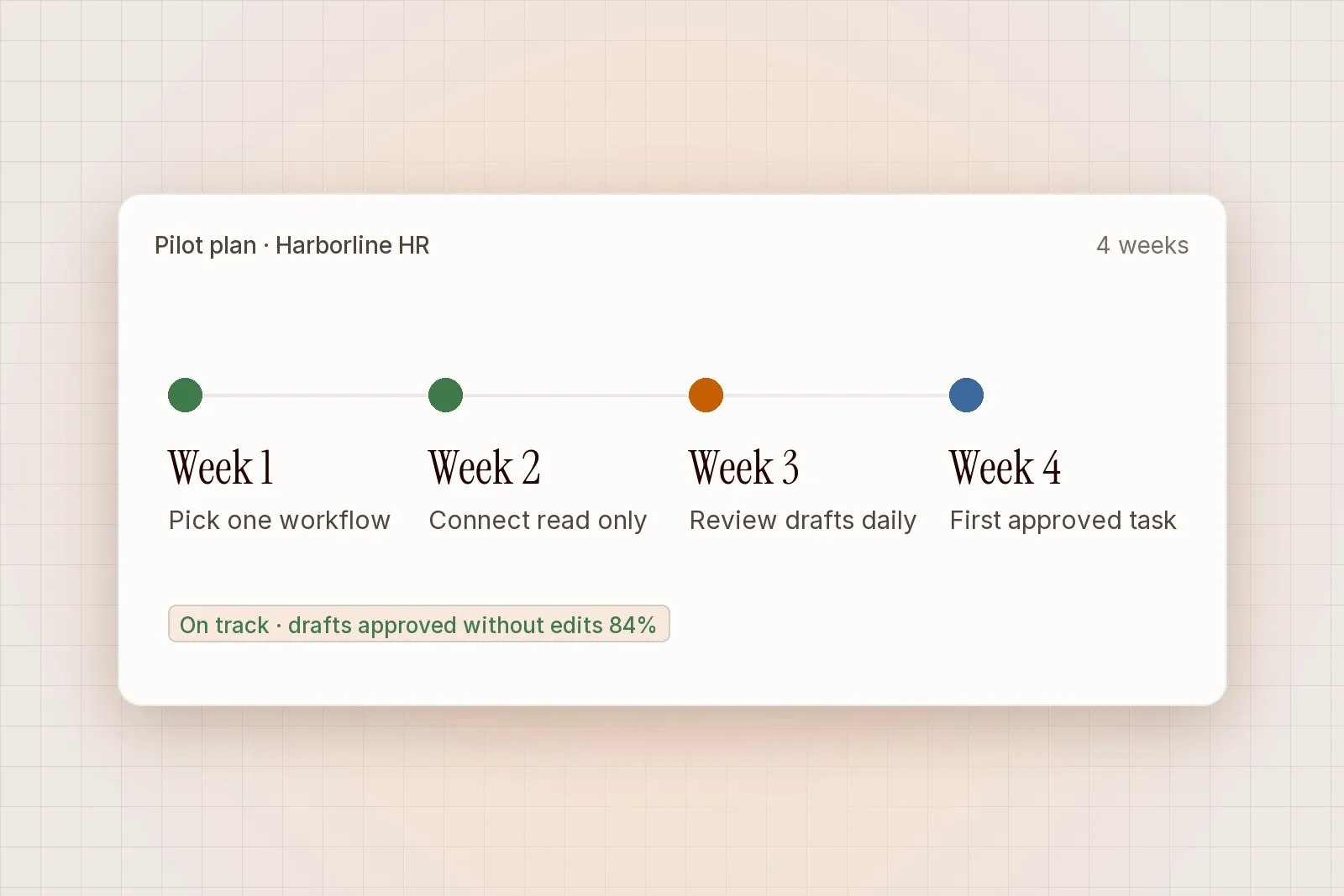
Rollouts stall when they start with the whole department. A dozen stakeholders each bring a different workflow, the scope grows every meeting, and six weeks later nobody has seen a single draft. The teams that get to a first approved task quickly do the opposite. They start with one workflow and the two or three people who already do that work. This is the plan we use with most teams, week by week, including who needs to be in the room at each stage.
Before week one: pick the workflow and the people
The first call is mostly about choosing. We ask each team to bring two or three candidate workflows and pick the one that is frequent, well understood and already reviewed by a person. Policy replies in HR, referral summaries in health and alert triage notes in security are common choices.
Then we agree on a small group:
- The owner. The person accountable for the workflow today, who decides whether the drafts are good enough.
- Two reviewers. People who do the work every day and will approve or edit each draft.
- A security contact. Someone who can approve read-only access to the systems involved.
Everyone else hears about it at the end of week four, with real drafts to look at.
Weeks one and two: map the work and connect read-only
The first two weeks are about understanding the work as it happens now. We sit with the reviewers and map it in plain terms: what arrives, who drafts the response, who approves it and where the finished work goes. That map becomes the rules the agent follows and the approval step it ends in.
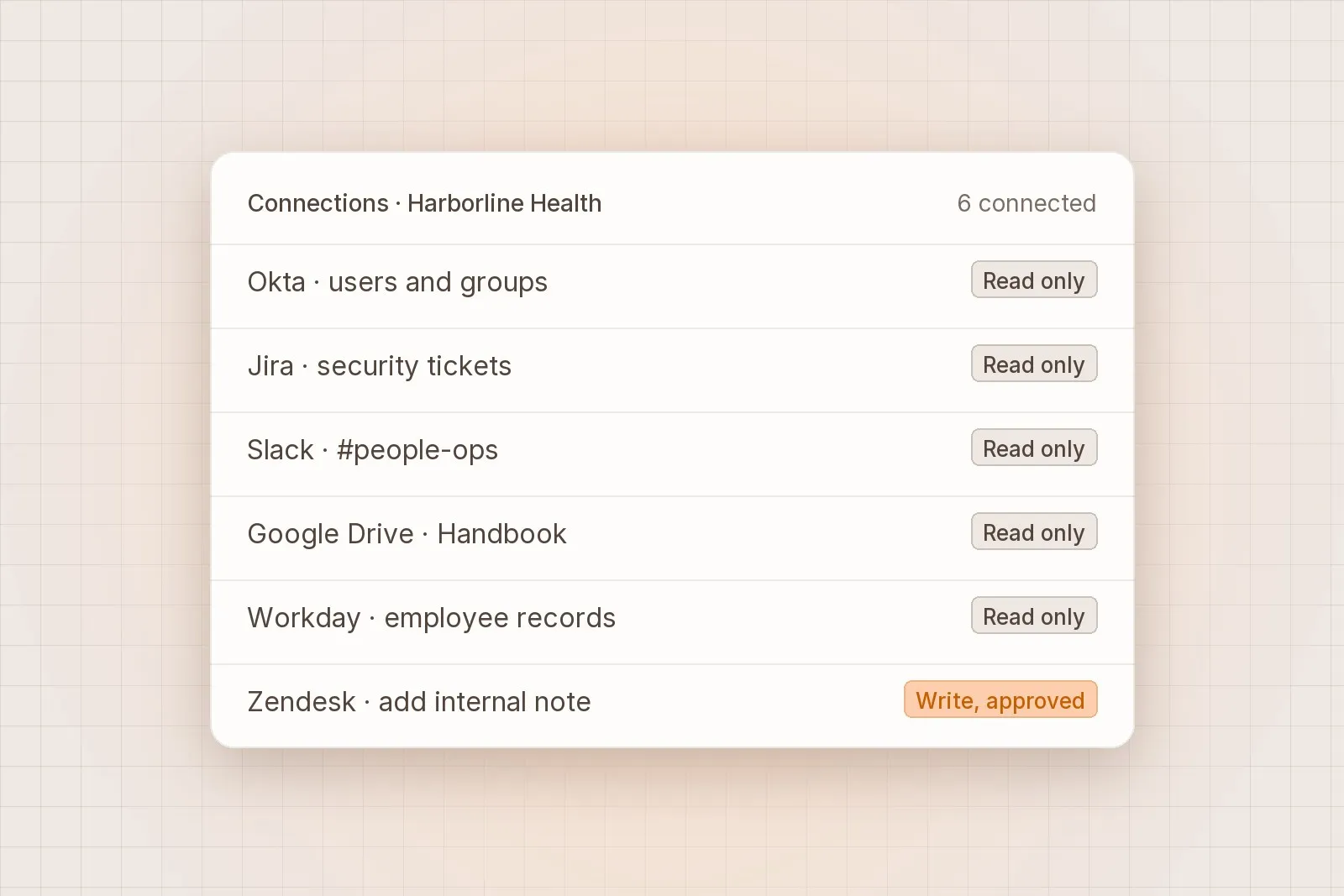
In parallel, we connect read-only access to the systems involved, and nothing else. For an HR team that might be the help desk and the policy library. For a security team it might be the alert queue and the identity provider. Read-only access means the security review can be short, because the agent cannot change any record during the pilot.
By the end of week two the agent is producing drafts in the background. Nobody acts on them yet.
Weeks three and four: run alongside the team
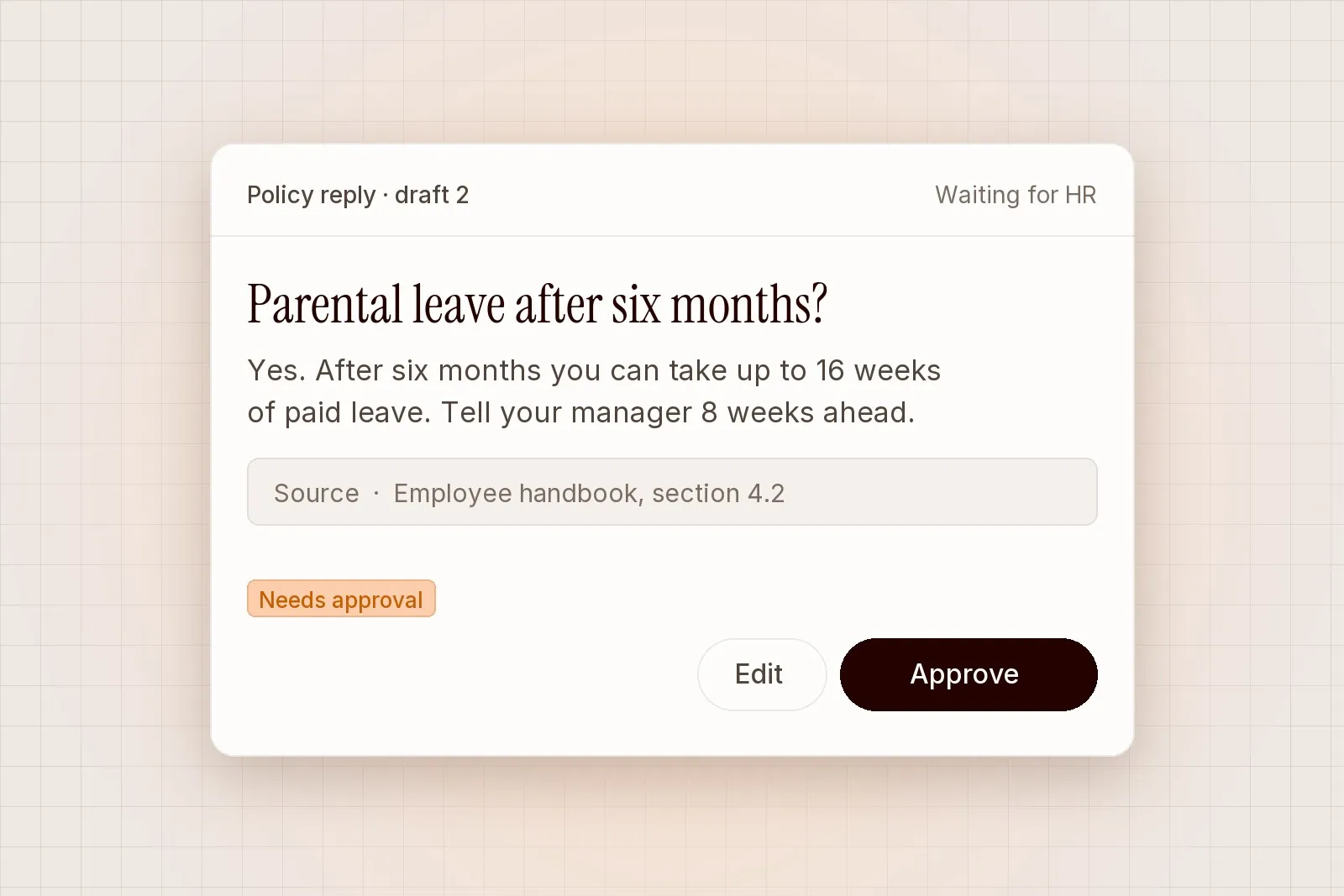
In week three the agent runs alongside the team. Each time a request comes in, the reviewer sees the agent’s draft next to the work they would normally do. They compare the two, correct the draft and note why. We meet twice a week to go through those notes and tune the rules together.
The questions we ask in those sessions are simple:
- Which drafts were approved with no changes?
- Which needed small edits, and were the edits about tone, facts or format?
- Which were wrong, and was the cause missing information or a bad rule?
- Which requests should never have been drafted at all?
The fourth question matters most. Every team finds a category of request that belongs with a person from the start, and the agent learns to route it there with a summary instead of a draft.
“We expected to spend the month on setup. By week three we were arguing about wording, which told us the drafts were close.”
Sam Ortiz, HR partner
Switching it on
The team switches the agent on when the reviewers say the drafts read like theirs. There is no fixed approval rate that triggers this. In practice it tends to be when most drafts need only small edits and the reviewers stop catching factual errors.
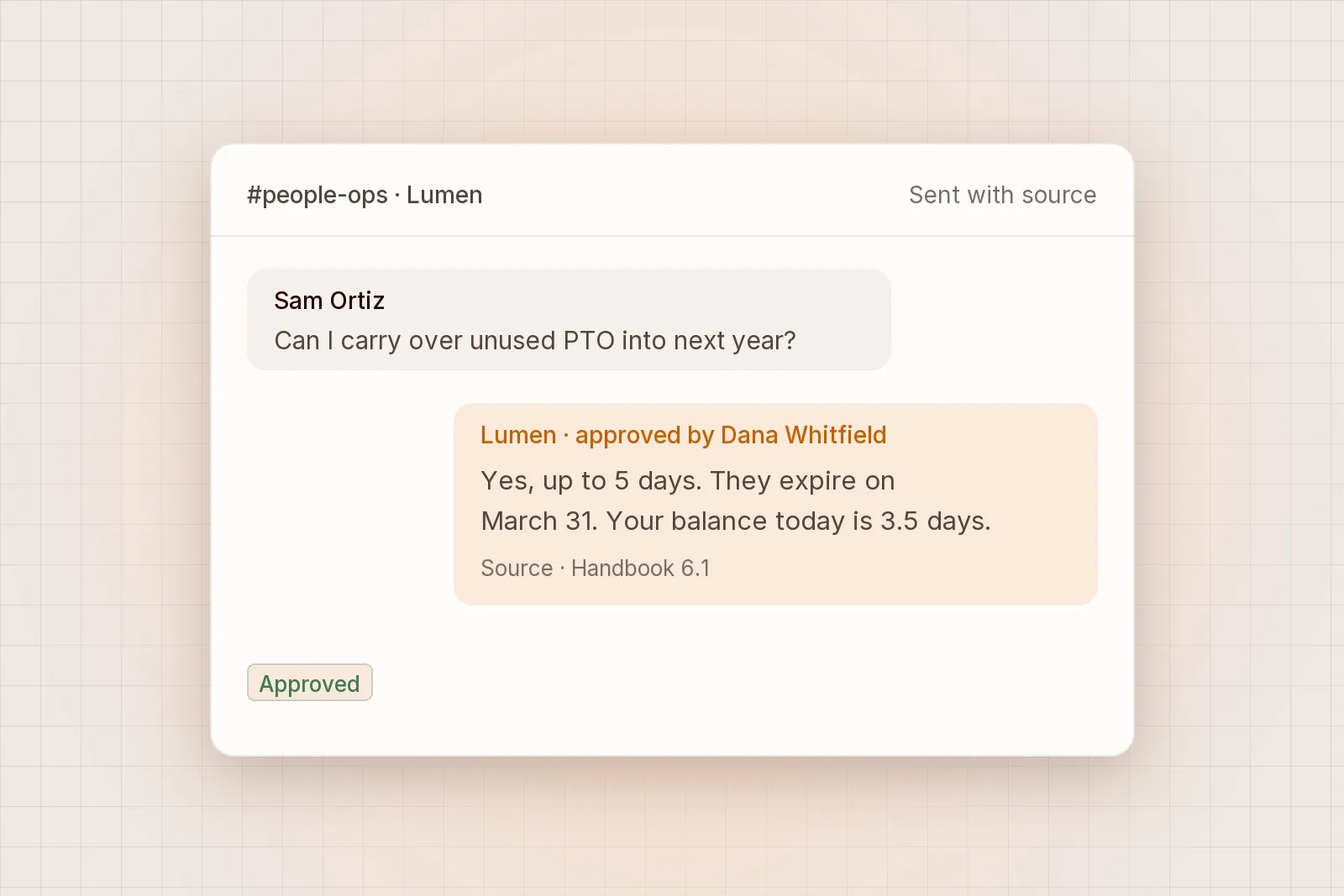
Switching on does not remove the approval step. Every action still waits for a person, and every draft, edit and approval is recorded in the audit log, which the owner can export at any time. If the team later wants the agent to write to a system, such as closing a ticket after a reply is sent, that permission is added one action at a time.
What the first month produces
At the end of four weeks the team has a working workflow, a set of rules they wrote themselves and a log of every draft and decision. Some teams need the full six weeks of the pilot window, usually because a connection took longer to approve. Either way, the next workflow goes faster, because the security contact has seen how access works and the owner can show real results to the rest of the department.