Webinar40 min
Webinar: What HR teams hand to agents first
Three HR leaders share the workflows they started with, and the ones they decided to keep for people.
In this 40-minute panel, three HR leaders compared the first workflows they handed to an AI agent, the ones they decided to keep for people, and how each team measured the time it saved. The discussion stayed practical: real request volumes, the edits reviewers made in the first weeks and the categories of question that never leave a person’s desk. This recap covers what the panel discussed, the main takeaways and the audience questions.
What the session covered
Each panellist described the workflow their team started with and why they picked it:
- Onboarding checklists. Dana’s team had new starters in four countries, each with a different checklist. The agent drafts the checklist for each hire from the offer details and local policy, and an HR partner approves it before it goes to the manager.
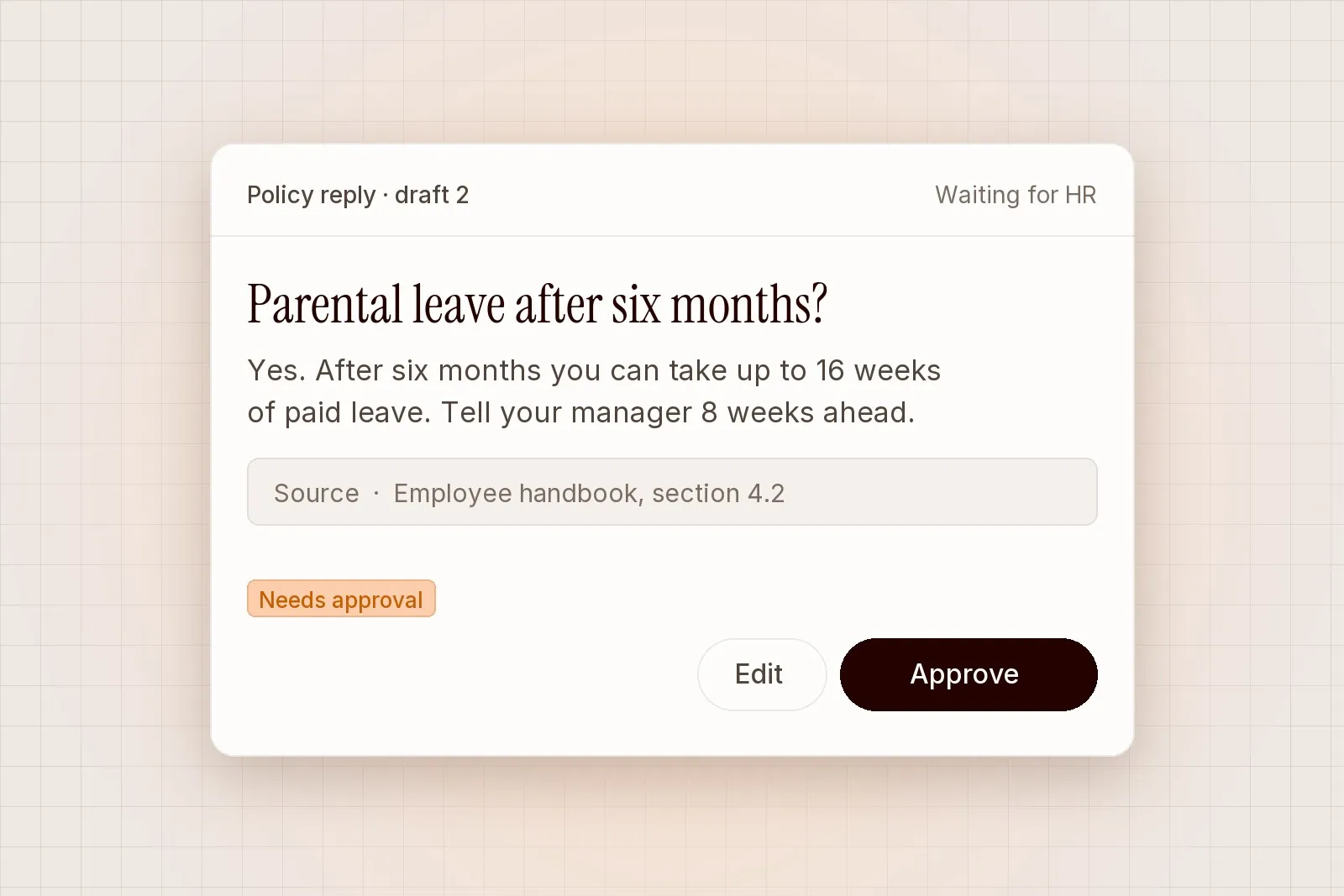
- Policy questions. Sam’s team answers several hundred employee questions a month about leave, expenses and working hours. The agent drafts a reply that quotes the relevant policy, and an HR partner reviews it before sending.
- Letter drafting. Lena’s benefits team produces enrolment confirmations, change letters and reminders. The agent drafts each letter from the benefits system, and a benefits specialist checks the figures before it is sent.
The panel then compared how the three rollouts went, where the drafts needed the most correction and what each team chose to keep away from the agent entirely.
Key takeaways
Start where the volume is high and the answers are written down. All three workflows had a clear source of truth: a checklist, a policy library or a benefits record. The agent did well where it could quote that source and struggled where the answer lived in someone’s head.
Keep sensitive topics with people from day one. Every panellist set rules on the first day that route certain requests straight to a person with a summary and no drafted reply. Health, pay disputes, grievances and anything involving a manager complaint were on all three lists.
Measure time saved per request. Each team compared the time an HR partner spent on a request before the pilot with the time spent reviewing a draft during it. Counting approved drafts on their own told them little. Minutes per request gave a number the leadership team could act on.
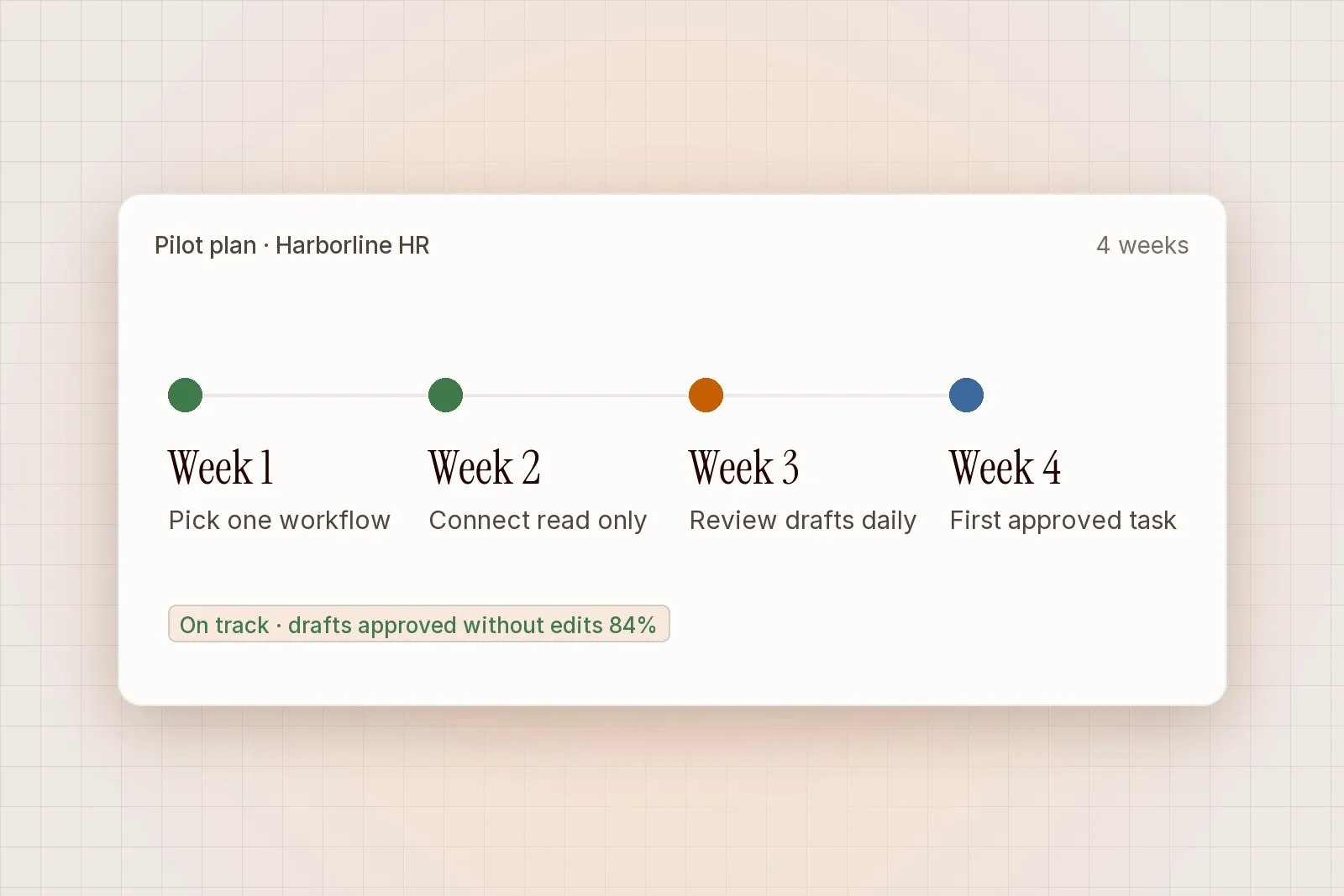
Let reviewers change the rules. The teams that moved fastest gave their reviewers a direct way to adjust the agent’s rules each week during the four to six week pilot. Edits fell steadily once the reviewers felt the drafts were theirs.
“The agent writes the first version of almost every policy reply now. The ones that matter most still start with a person, and that was our decision from the first week.”
Dana Whitfield, VP People
What the panel kept for people
The panel agreed on a short list of work that stays with HR regardless of draft quality:
- Any conversation about an employee’s health or a medical condition
- Pay disputes and corrections to someone’s salary
- Grievances, investigations and disciplinary matters
- Decisions about exceptions to policy
For each of these, the agent’s job is to recognise the request, write a short summary and pass it to the right person. Lena noted that this alone saved time, because requests arrived already sorted.
Questions from the audience
How did employees react to replies drafted by an agent? Sam said most employees did not notice a difference, because every reply was reviewed and sent by a named HR partner. A few noticed the replies had become more specific, since each one now linked to the policy it quoted.
What about data protection? Dana’s team confirmed before the pilot that employee data would not be used to train models and that drafts were kept for 30 days by default. Access ran through their existing SSO, with SCIM removing leavers.
Did any workflow get dropped? Lena’s team tried drafting replies to benefits disputes and stopped after two weeks. The cases were too varied, and summaries for a specialist worked better.
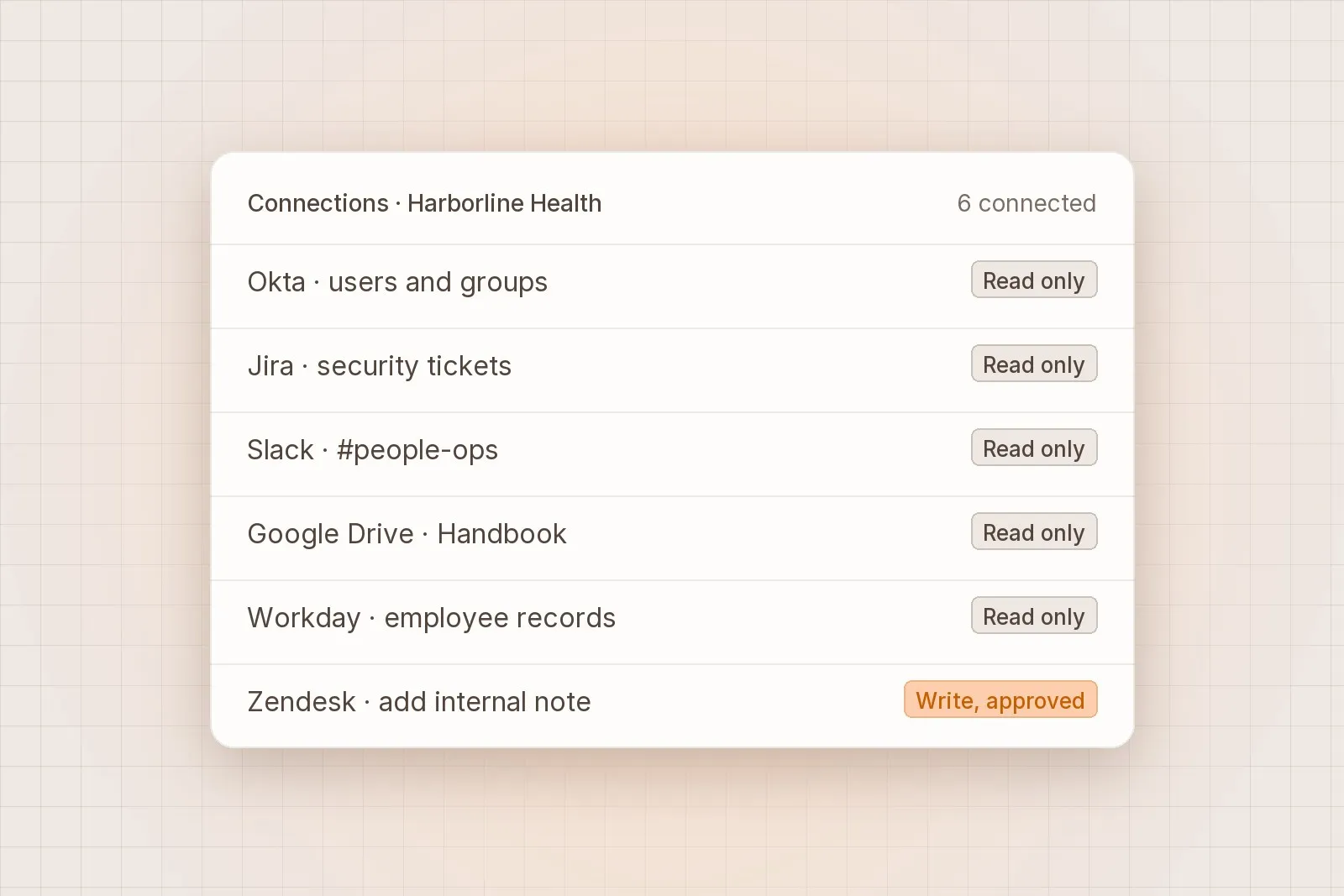
How did you get security sign-off? All three connected the agent with read-only access first, which made the security review short. Write access came later, one action at a time.
Speakers
- Dana Whitfield, VP People. Dana leads the people team and sponsored the first agent pilot across onboarding and policy questions.
- Sam Ortiz, HR partner. Sam reviews policy replies daily and ran the weekly rule reviews during the pilot.
- Lena Park, Benefits lead. Lena’s team uses the agent for benefits letters and routes disputes to specialists.
The session was hosted by the Lumen team. The recording is available on request.